12.6.11

An Ode to Comfortable Shoes

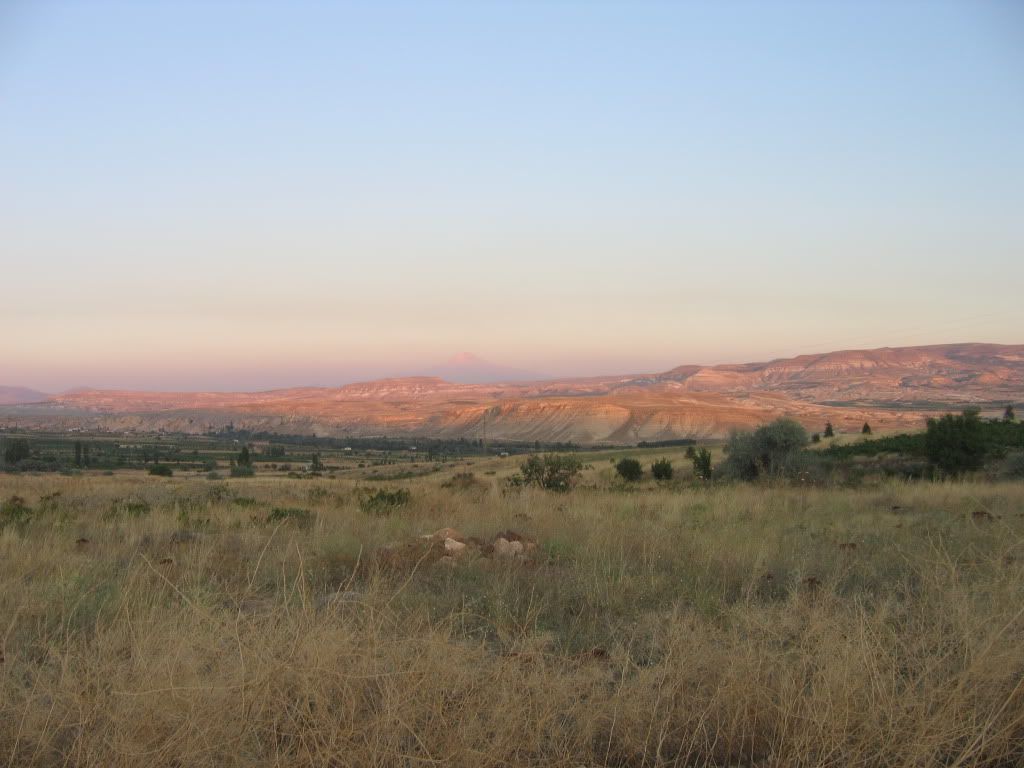
Don't bother with uncomfortable shoes. Now is not the time to break in a new pair or wear your chicest pair. As a traveler, you simply never know when you may need to walk long distances. You may find yourself in Kapadokya, Turkey, kilometers from the nearest paved road, when your driver decides to take off and leave you there. As you walk through grape orchards and walnut groves and into the setting sun, won’t it be nice to be able to focus on the stunning view instead of painful blisters and your poor abused feet? So if you can't walk at least 3 km in your shoes, don't pack them.
You know what? I’m going to take that even further. Don’t bother with any uncomfortable clothing. If you can’t sit in it for twelve hours on a mountainous bus ride, it has no place in your pack.

And while you’re at it, roll your clothing instead of folding. This takes up less space and keeps everything looking neat and smooth, though you probably shouldn’t be packing anything that wrinkles anyways.

I know this advice is boring and prosaic, and it’s so common-sense that you don’t need me to tell it to you. You’ve probably heard it or thought it before and you had the best intentions when packing, really you did, but then that cute new shirt you just bought gave you puppy dog eyes and so you couldn’t leave it at home and you’re planning on hiking so of course you needed to buy new hiking boots for the trip, never mind that they’re not broken in yet. So this tip comes with an extra freebie: take the above advice. No excuses, no exceptions.


Did I say no exceptions?

Fine, an exception: Pack one dress. Lightweight jersey, non-wrinkling. You never know when you’ll end up at swank nightclub in Beirut surrounded by gorgeous Lebanese women who are all doing a remarkable brunette-Barbie impression. (Seriously. Lebanese women are stunning.) On occasions like this you’ll be happy to pull out your (unwrinkled) dress and feel like a lady, instead of feeling like a shlubby traveler.

7.6.11

Mangosteen

Let the fruit exploration continue!

street food and fruit 020

I remember reading a book that detailed the story of a dying woman’s last wish to eat one more mangosteen before she died. Naturally, this story piqued my interest in the fruit.

street food and fruit 042

Years later, during my first week in Cambodia, my host bought me a cartoonish purple fruit with a silly little hat of lime green leaves. I had no idea what it was and no clue how to open it. “It’s a mangosteen, of course!” she exclaimed, digging her thumb into the base to pry open the fuchsia exterior. The interior of the mangosteen surprised me completely. Those neon white sections, almost like a monotone little mandarin orange, were perfectly contained within the thick purple shell. This fruit was totally blowing my mind and I hadn’t even tasted it yet.

street food and fruit 084

The texture is as juicy as a ripe peach and the flavor is similar in some ways as well. A mangosteen tastes pure, light, refreshing. Its flavor is a burst of sweet and tart in your mouth, but doesn’t linger, doesn’t bite your tongue, and definitely doesn’t weigh you down. The mangosteen is considered by Chinese medicinal wisdom to be a cooling fruit. This is one reason it is widely known as the queen of fruit, as it is generally eaten after consuming the heating durian, which is known as the king of fruit. Check back because I’ll be posting about durian and the World Durian Festival quite soon.

street food and fruit 088

Lastly, I want to share a little trick I recently learned about mangosteens. When you turn them over, you’ll see a daisy-like purple flower embossed on the base. Count the petals. However many petals you see on this flower is exactly how many sections of juicy white fruit are inside the mangosteen. Neat, huh?

street food and fruit 047

5.6.11

Red Dragonfruit

Now that I’m in Thailand, I’m eating fruit for breakfast every day. Many of these fruits are unique to Southeast Asia and other tropical climates so I thought it might be interesting to blog about such lesser-known fruits.
street food and fruit 167
Let’s start with my first choice for breakfast: dragonfruit.
street food and fruit 111
Dragonfruit is one of the most beautiful fruits I have ever seen. Just look at the pink and green skin with its scale-like protuberances (and wait till you cut it open!). It is a heavy, juicy fruit shaped like a mini nerf football. Its skin peels off easily with no need for a knife, which makes it easy to eat on the go but I’ve cut it open here so you can see the gorgeous, speckled interior. Dragonfruit comes in two common varieties, white and red. The white, though visually stunning, is not particularly flavorful.  It is most notable for its crisp and juicy texture and crunchy little black seeds—almost like a bland kiwi. A squirt of lime juice will liven it up, though. Here’s a tip I discovered when I was staying in Mui Ne, Vietnam (the epicenter of all things dragonfruit): pop the white dragonfruit in the fridge and eat it cold for a refreshing treat that will cut through a hot sticky climate.
 more street food and fruit 009
The red dragonfruit, in contrast, has a sweeter, more concentrated flavor. It is as juicy as the white dragonfruit, but is more perfumed, with a pure and mild sweetness uncut by any tartness. Like beets, it stains your hands red when you eat it, and be warned, it will color your, um, output (?) as well. I had a few apprehensive moments until I figured this out :)
street food and fruit 090
See how easily the peel separates from the fruit?
I’ve read that some people are trying to cultivate the dragonfruit more widely, but there are some inherent difficulties with this. The dragonfruit is a night-blooming cactus which is pollinated by a type of bat native to South and Central America as well as Southeast Asia but cannot be found in many other places. So if you see a dragonfruit in the U.S. or in Europe it will likely be very expensive as it’s either been shipped a long way or hand-pollinated in a boutique orchard. Therefore, I would recommend giving it a pass unless you’re desperate to try it.

3.6.11

The Little Things

Routine is a luxury. When you’re changing countries, changing rooms, living out of a backpack, a routine is difficult to establish and maintain. I tend to travel in spurts—weeks and months go by without ever fully unpacking—but occasionally I’ll stay in a place long enough to stack my books, hang my clothes, and use my oft-buried moisturizer. I lived in Cambodia, in Bulgaria, in Turkey, and now, I’m living in Thailand.
I’m volunteering and teaching here on an isolated campus 45 minutes from the next town. Beside teaching and preparing my lessons, my days are entirely my own and I have eagerly grabbed this opportunity to establish my favorite luxury—a routine. Every day I wake up early, do some yoga asanas and meditate. I eat fruit, plentiful tropical fruit, for breakfast. I prepare for my lessons, I teach, I write. And every day I run.
street food and fruit 001
Rambutan tree in season
I head out as the sun sets, as the sky dances with color and the thick air releases the heat. I run on a gravel and mud path, splashing through  puddles created each day by the insistent and unpredictable rain. I run past hibiscus plants, banana palms, orchids. I turn a corner and run under a canopy of cashew trees and I look down at the path in front of me riddled with gray crescent-moon cashew shells. I turn another corner and now I’m dodging branches laden with rambutan. The lower fruit is tentacled with green spindly arms but the rambutan in the higher sundrenched branches is red. A truck passes, heading into the fruit orchard I’ve left behind. A man riding in the pickup smiles and bows to me and I smile back, putting my hands together and bowing my head in response. It’s not the first time we’ve passed each other.
street food and fruit 003
Shriveled cashew nuts in the shell
By now, my body is loose and my pace quickens and I watch the track in front of me. A line of giant ants, their bulbous jet black bodies tottering on long stilt-like legs, crosses the path diagonally. If it’s not too muddy I see them here every day, always crossing in the same place, always heading in the same direction. I wonder absentmindedly where they are going, but then the scenery changes and my mind is fluid and my thoughts are too slippery to hold on to. What am I thinking about as my feet pound the rain-soaked ground, as I leap over the one puddle which consumes the entire path?  I am consumed by the rhythm of my body, of my feet and my breath and my pulsing blood. I round another corner and begin the most uneven stretch of my run. Each day on this stretch the puddles shift; they move and shrink and expand with the fierce sunshine and the intermittent rain. So each day I weave between them, forging a new zigzagging path. Then, with sweat droplets peppering my face and splatters of grit peppering my legs, I run up the broken sidewalk toward my room. Instead of feeling relief that the run is over, as I used to do, I bound up the concrete stairs, dancing a little at the rhythm still playing in my head.
street food and fruit 002
Banana palm with a hanging purple banana flower
In my travels I generally prefer to never take the same path twice. When faced with a decision, I tend to operate on the Principle of Least Opportunity (don’t bother googling it, my friend Justin coined the phrase) which states that when faced with more than one option, you should choose the one you may never have the opportunity of taking again. Yet these days I sleep in the same bed and wake at the same time. I leap the same puddle, wai (bow to) the same man, and dodge the same ants as I go for my daily run. I revel in the little changes, the shifting puddles, of my daily life and ensconce myself in the luxury of routine.

2.6.11

Thai Street Food: Khao Niao Tat

How many times can I say something is my favorite until you stop believing me?

This is another of my favorite Thai sweets. It’s the perfect bite-size snack and again has that great mix of sweet and salty and creamy.

street food and fruit 033

Khao Niao Tat is a base of coconut sticky rice topped with a sweet and salty coconut cream custard. There’s a scattering of black beans throughout. It is a great mix of textures, from the chewy sticky rice to the creamy and soft custard and the occasional bite of black bean. The flavor is phenomenal as the salt helps to cut through the sweetness. I’m always amazed at how Thai sweets use just three simple ingredients—rice, coconut, and sugar—to create a whole multitude of delicacies.

street food and fruit 029

You can buy Khao Niao Tat by the square, each one about half the size of my palm, for only 5 baht (less than $0.17) and they come wrapped and packaged in a little banana leaf pouch. Here’s a recipe in case you want to try making it at home.